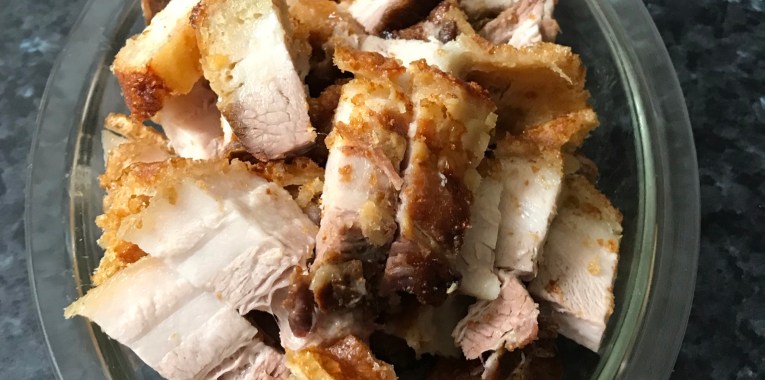
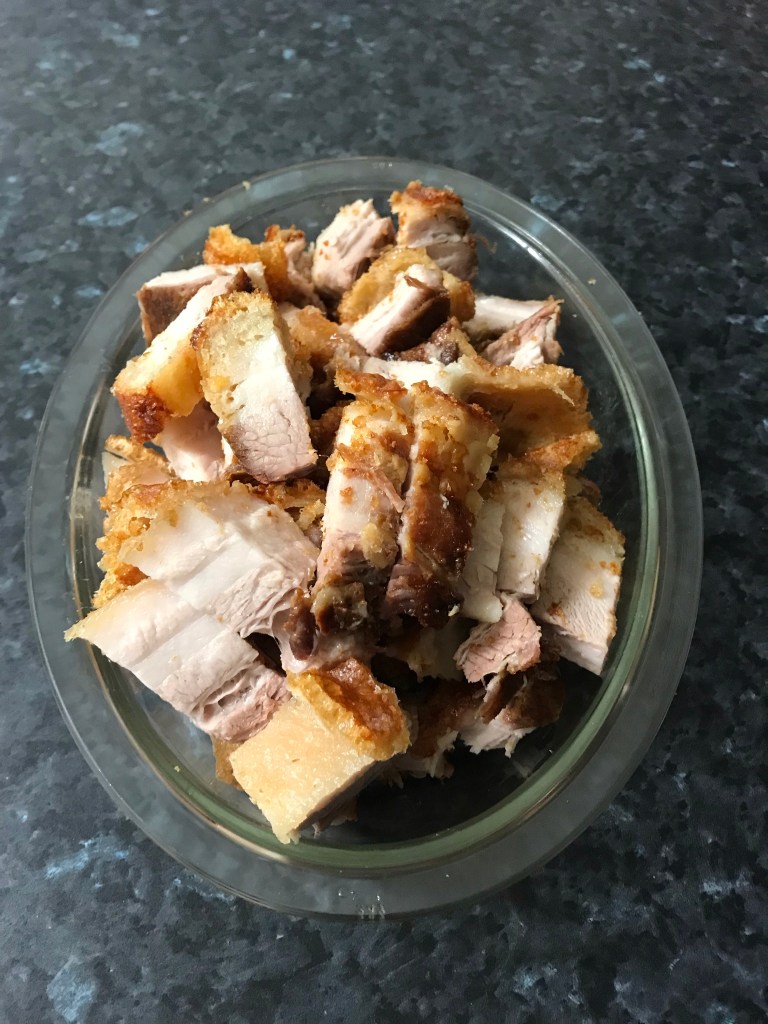
Pork belly is a fatty cut of meat, literally from the belly of a pig. Pork belly crackling is really crispy. In Malaysia, grandma use to make roast pork belly crackling by piercing with a sharp metal rod and rub with lots of salt on skin and meat. Then she rubs five spice powder.
Google: “Pork belly is a fatty, boneless cut of meat that comes from the belly of the pig. When kept whole, the cut looks like a brick of meat with a thick layer of flat running along the top and smaller layers of fat marbled throughout. The function it’s possibly most famous for? Bacon! When pork belly is stripped of its fatty outer layer then smoked, cured, and sliced thinly it becomes what we know as everyone’s favourite sizzling breakfast food. It’s traditionally used in Asian, Hispanic and Northern European cuisines where it plays both a starring role (like in a pork belly bao) and a salty add-on to other dishes (like pancetta).”
“Don’t confuse pork belly with bacon, though. Pork belly is a fresh, thick slab of meat cut from the pig’s abdomen, uncured and unsmoked. Bacon, while often made from belly, has been cured, smoked, and sliced. It can also come from less fatty back cuts. So, while they start from a similar place, they end up as very different ingredients in your kitchen.”
Today, I am roasting pork belly in milk. Browsed a handful of recipes to see and taste for myself which is better: without milk or with milk. Well, the verdict is time consuming, resulting a flavourful, crisp skin, and delicious. Let’s roast pork in milk!!!
Ingredients
1.2 kg pork belly
3 dried bay leaves, crushed
3 sprigs rosemary
2 cloves garlic, crushed
2 sage leaves
2 Tsp fennel seeds powder
2-2 1/2 c milk about 750 ml
salt
pepper
Method
One day in advance
Wash hands and pat the pork dry with a paper towel. Score the skin of the pork belly with a very sharp knife, taking care not to cut through to the meat. Mix together fennel seeds powder, 1 Tbs salt and pepper and rub this all over the meat.
Place rubbed pork belly on a piece of foil and create a foil boat wrapping the pork, leaving the skin exposed and place in a baking tray. Place in the fridge for overnight to help the skin further dry out. If time does not permit, try to air dry the pork in the fridge for at least 1-3 hours.
The next day
Preheat oven to 240˚C. Bring out pork belly from fridge and remove the foil boat for about 1 hour. With pork belly in baking tray; pat dry the skin again with paper towel and season the skin with some more salt; rub all over the skin and in between the scored parts: one whole layer of salt evenly. Add sage leaves and roast for 20-30 minutes until the skin is starting to blister and crackle. Watch closely for burning.
Carefully bring out the pork tray a bit from oven. Pour the milk around the meat to come about half to two thirds of the way up the sides of the pork. Add rosemary sprigs, crushed bay leaves and crushed garlic. Reduce the heat to 160˚C and roast for a further 1 1/2 hours or until the meat is meltingly tender.
Basting the pork with the milk every 25 minutes. This will prevent the skin from burning. The milk will reduce during the cooking. Check the level of milk during cooking and if it has evaporated add a little more to baking tray.
When it is time to remove the pork from the oven, you should be able to poke a metal skewer into it and, when it comes out, the juices should run clear. The crackling should be lovely and crisp, but if it isn’t quite there yet, transfer the pork belly on to another baking tray and put it back into the oven for 10 minutes. Discard the milk (they will break into curds).
Leave the pork belly to rest for 20 minutes. Then remove it from baking tray and leave to rest for a further 10 minutes on a plate. For easy cutting, place the meat flesh side up on a chopping board and use a heavy, sharp knife to cut it into slices about 3-4cm thick. Serve warm or at room temperature with rice or salads.
Note: You MUST DRY the pork belly with the skin EXPOSED in the fridge for at least 24 hours.
If any edges are starting to burn, place a small piece of foil to cover to get the skin as evenly crisp as possible. If needed, place pork under broiler for a few minutes to speed up the blistering process (watch carefully to ensure skin does not burn). This will reduce the moisture and result in a super crispy skin.
If possible, ask your butcher to select a pork belly with a thin layer of white fat in between the meat sections. I have found that these pieces results in the most optimal end result. The pork belly will be not as fatty and have plenty of lean meat.
Saw on one recipe saying can use the milk; dont waste. “Whisking to break up any curds, then strain through a sieve into a small pan. Tip in any resting juices from the pork and warm through to make a thin, milky gravy.”
Saw on another recipe saying: “Reduce oven to 170C. Roast, topping up milk when needed, for 2 hours or until meat is tender and the rind is crisp.”
https://helenscchin.com/2020/06/08/roast-pork-in-milk/
#helenscchinrecipes
#bakingfoodideasroastingfoodideas
#cookingforthefun
#foodiesplus
 helenscchin's Blog
You must be logged in to post a comment.