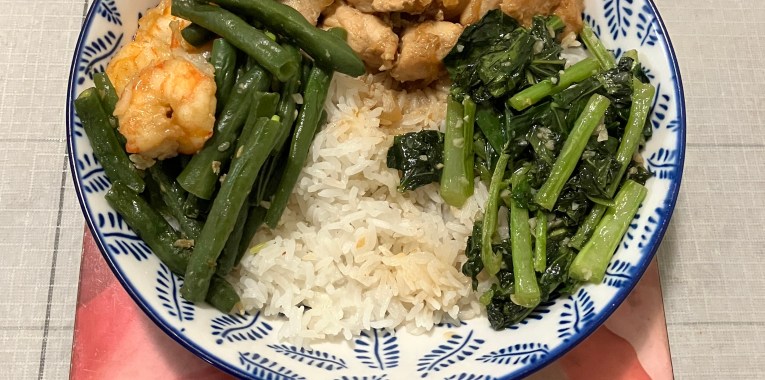
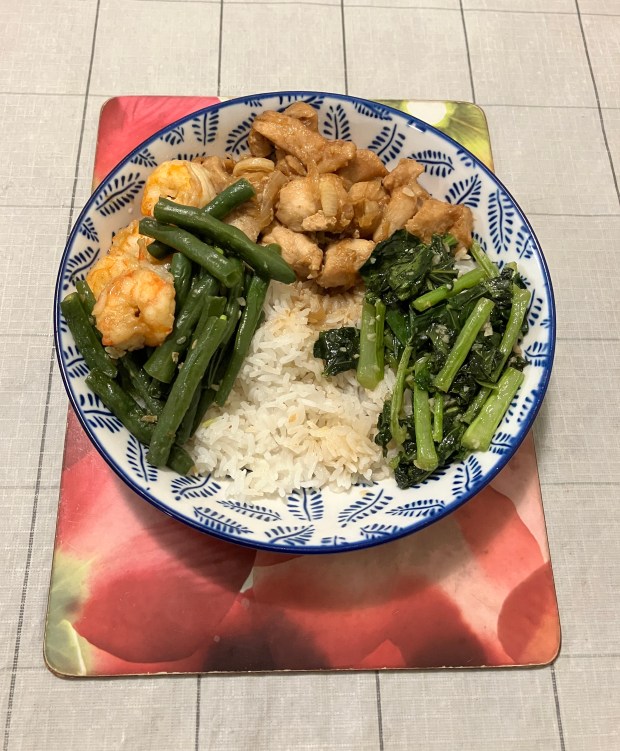
Bought pork neck, prawns, and two vegetables on sale. Decided to marinate and caramelize the pork, cook prawns with green beans, and choy sum with garlic to have with rice, run out of my favourite chili sauce.
“Pork neck (or collar butt) is a flavourful and economical cut from the upper shoulder, known for its marbling and tenderness. It is versatile for various cooking methods and provides high-quality protein, essential vitamins, iron, and zinc. The meat remains juicy and flavourful due to its intramuscular fat but should be consumed in moderation due to its high fat content. Additionally, it is a good source of collagen, beneficial for joint health, and must be fully cooked to prevent foodborne illness.”
“Prawns are small, nutritious crustaceans: provide a low-fat source of high-quality protein, rich in essential nutrients such as iodine, selenium, zinc, and Vitamin B12. Support heart health, weight management, and muscle growth, offering nearly 25g of protein per 100g serving while being low in fat and calories. Prawns contain omega-3 fatty acids that reduce inflammation, and although they have cholesterol, they are low in saturated fat. Beneficial for building muscle and keeping you full, but can be allergenic and should be consumed in moderation due to potentially higher sodium levels. Quick to cook, making them suitable for fast, healthy meals.”
“Green beans and Choy Sum are nutritious vegetables from different plant families, each with unique benefits. Green beans are rich in soluble fiber, vitamin K, folate, and low in calories, which supports heart health and gut function. Choy Sum contains vitamin C, beta-carotene, calcium, and low in oxalic acid, enhancing nutrient absorption and supporting bone density. Both vegetables contribute to gut health and provide antioxidants.”
My meal are simple, healthy and delicious. Let’s cook!!!
Ingredients
Caramelised pork
700 g pork neck, cut into bite-sized chunks or sliced into 1cm thick strips
1 small onion, skin removed and sliced
3 Tbs soy sauce
3 Tbs chicken stock or water
1 Tbs minced garlic
1 Tbs Shao Xing Chinese cooking wine or dry sherry (See Note)
1/2 Tsp kicap manis or Asian thick caramel sauce (See Note)
oil
pepper
salt
Prawns green beans
300 g fresh prawns, head (keep heads for other use) and tails removed, deveined
200 g green beans, trimmed and cut to bite-sized
2 Tbs minced garlic
1 Tbs soy sauce
1 Tsp mirin sauce (See Note)
a tiny drop of oyster sauce
a splash of chicken stock
oil
salt
pepper
Choy sum with garlic
2 bunches of choy sum, removed end stems, cut to bite-sized
3 Tbs minced garlic
2 Tbs oil
1 Tsp Shao Xing Chinese cooking wine
salt
pepper
chicken stock (OPT)
Method
Caramelised pork
Wash and pat pork bite sized well. Rub pork chunks with a small amount of oil and season it well with the ingredients mentioned above for 10 minutes and place in fridge; except garlic, onion, caramel sauce, Shao Xing Cooking wine, and chicken stock.
Heat saucepan over high heat until it smokes lightly. Add the oil and swirl to coat. Add the pork in a single layer—do not overcrowd saucepan. Let it sear for 1–2 minutes without touching it until it is slightly brown. Flip and sear the other side.
Once pork is browned, push it to the sides of the wok. Add a little more oil to the center if necessary, then add the minced garlic, and onion. Cook for 30 seconds until fragrant. Mix the pork back in with the aromatics. Pour in the Shaoxing wine, kicap manis, and soy sauce. Toss constantly to coat. Add the chicken stock. The sauces and natural fat from pork will thicken and turn into a sticky, glossy coating within 3-5 minutes, sticking to the pork. Once the sauce is reduced to a sticky glaze and the pork is cooked through, turn off the heat. Transfer to bowl. Keep warm with holes plastic cover.
Prawns green beans
Pat prawns dry with paper towels to ensure a good sear. Marinate the prawns for 30–60 minutes in a mixture of mirin, soy sauce, and oyster sauce for maximum flavour. Place in fridge. Once time up, bring out to room temperature about 5 minutes.
When 5 minutes up, heat 2 Tbs oil in a saucepan over medium-high heat. Add the garlic, cook for 30 seconds until fragrant. Add the green beans and cook for 5 minutes until tender-crisp.
Add the prawns only to saucepan with the beans. Reserved the marinade sauce fo later. Cook prawns for 2-2 1/2 minutes, or until turn pink and opaque. Do not overcook, or prawns will become rubbery. Add marinade sauce toward the end of cooking to allow it to reduce and thicken, coating the ingredients without burning the sugar in the mirin. Spoon onto a serving plate. Keep warm with another hole plastic cover.
Choy sum with garlic
Heat saucepan over high heat for a quick minute. Add 1Tbs oil, then turn the heat to medium low. Lowering the heat here is important to avoid burning the aromatics. Add garlic and cook for 15 seconds until fragrant. Add the stems first, as they take longer to cook through. Cook for about 1 minute. Then, add the leaves.
Increase heat to high and add cooking wine and a splash of chicken stock. Season to taste with salt and pepper. Cook a further 1 minute. Spoon on to serving plate.
Assemble
If caramelised pork had cool down. Heat in microwave to warmed up again for 1-2 minutes. Give a stir or two. Next warmed up prawns green bean for 1-2 minutes. Spoon rice onto bowl, place caramelised pork on top , followed by prawns green beans on the far left and choy sum on the right. Enjoy with a glass of Pinot Griggs or white Moscato!!!
Note: From the handful recipes I had browsed
“Asian thick caramel sauce—often called cooking caramel or thick soy sauce—is typically a savoury-sweet ingredient rather than just a dessert sauce. It is known for having a thick, treacly texture with a subtle saltiness combined with caramelized sugar, providing both rich colour and umami to savoury dishes like braised meats and noodle stir-fries. It is not overly salty, but rather a mild, sweet, and slightly salty taste with smoky or metallic undertones. Used for marinating, soy-sauce-based chicken, and noodle dishes like Char Koay Teow.”
“Yes, Shao Xing cooking wine will contribute to a browner, deeper colour on pork neck when used in a marinade. Because Shaoxing wine typically has an amber to light brown hue, it imparts a golden-brown tint to the meat during the marination process. Shao Xing cooking wine acts as a tenderizer and adds a subtle, savoury sweetness, while its natural amber colour stains the pork. If you want a deeper brown or red colour (such as for char siu), Shao Xing cooking wine is usually combined with darker ingredients like soy sauce, hoisin sauce, or fermented red bean curd. When searing or roasting, the sugars in the wine help the pork develop a rich brown crust, especially when combined with honey or soy sauce in the marinade.”
“Mirin is a sweet, low-alcohol Japanese rice wine (8–14% ABV) used as a staple ingredient to add sweetness, umami, and a glossy sheen to dishes, particularly in sauces, glazes, and marinades. It is essential in Japanese cooking for creating tender, glazed foods and balancing salty flavours. It is perfect for glazing grilled fish, chicken, or beef. Combine with miso, ginger, garlic, or soy sauce to tenderize and flavour meats and fish. Add a splash to stir-fries, ramen broths, or noodle dishes for depth. Mix with rice vinegar, soy sauce, and sugar to make quick pickles. If you cannot find mirin, you can use rice wine vinegar with a bit of sugar instead. Another recipe said this: Add early in cooking to let the alcohol evaporate, leaving behind a subtle sweetness.”
https://helenscchin.com/2025/05/06/caramelised-pork-prawns-green-beans-choy-sum-with-rice/
#helenscchinrecipes
#mainmeals
#cookingforthefun
#foodiesplus


You must be logged in to post a comment.