

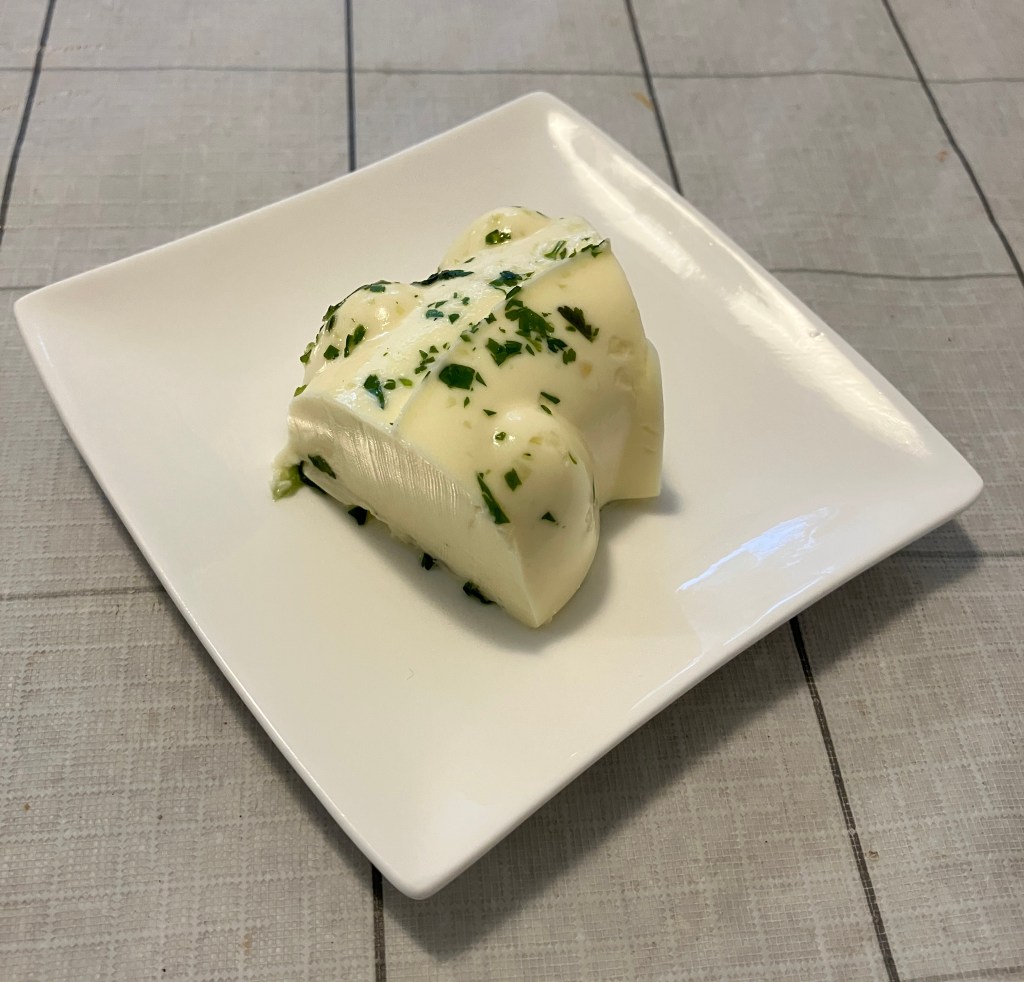
I made cilantro parsley pesto yesterday and I didn’t add nuts and forgot to add cheese, before transferring to my sterilized bottle to keep in the fridge. I thought why not use cilantro parsley pesto to make panna cotta which nobody had ever done it. Be courage to create, combine, explore the glory gift God had given you. So, I am taking up this challenge to try out.
Google: “Italy is famous for its diverse and flavourful Mediterranean cuisine, including iconic pasta dishes, classic pizzas, and risottos that embrace fresh ingredients, aromatic herbs, and rich flavours. Italian cuisine is heavily influenced by Mediterranean flavours, including olive oil, fresh produce, seafood, and aromatic herbs and spices.“
“Panna cotta (Italian: [ˈpanna ˈkɔtta]; Piedmontese: panera cheuita [paˈnera ˈkøjta]; lit. ’cooked cream’) is an Italian dessert of sweetened cream thickened with gelatin and molded. The cream may be aromatized with coffee, vanilla, or other flavorings. The Piedmont region includes panna cotta in its 2001 list of traditional food products. Its recipe includes cream, milk, sugar, vanilla, gelatin, rum, and marsala poured into a mold with caramel.“
Google: “Pesto (Italian: [ˈpesto]) or more fully pesto alla genovese (Italian: [ˈpesto alla dʒenoˈveːse, -eːze]; lit. ’Genoese pesto’) is a paste made of crushed garlic, pine nuts, salt, basil leaves, grated cheese such as Parmesan or pecorino sardo, and olive oil. It originated in the Italian city of Genoa, and is used to dress pasta and flavour genoese minestrone soup.”
Google: ‘Cilantro has the cooling power of mint and some of the same flavour notes of basil. Cilantro is almost exclusively used in savoury dishes and shines the brightest when used fresh at the end of the dish as opposed to being added at the beginning of the stewing, baking, or grilling process. Parsley’s well-balanced flavour profile actually stimulates all taste receptors on your tongue – from sweet to salty, so it complements an abundance of savoury recipes, bringing out the flavour and balancing the dish.”
I am glad it turned out perfectly to my taste bud. My panna cotta is subtly sweet, has a silky smooth mouthfeel, with a rich savoury flavour of lemon, peppery, pungent and a touch of earthiness taste. I you never try you will never know that it tastes good to your taste bud. Let’s make sweet and savoury dessert!!!!
Ingredients
300 g sour cream
300 ml thickened cream
1/2 c granulated sugar
1-2 Tbs cilantro parsley pesto
3 Tsp gelatine powder
1 Tsp peppermint essence
water
Garnish
some more cilantro parsley pesto
Method
Grease the jelly mould with oil and set aside. Mix gelatine powder with 2 Tbs of water in a bowl and set aside. Next, spoon about 2 Tbs cilantro parsley pesto into the greased jelly mould. Set aside.
Put sour cream, thickened cream, sugar, and peppermint essence in a pot on medium heat. Stir occasionally until bubbles form around the edges, about 5 minutes. Once the sugar dissolves, remove from the hob.
Stir the gelatine mixture again; if it has hardened, add about 2 Tbs of water, stir again, and add it to the warm cream. Stir until the gelatine dissolves.
Once the cream gelatine mixture cooled about 5 minutes. Using a ladle, spoon the cooled mixture over the cilantro parsley pesto. Before spooning the last cream mixture; stir in 2-4 Tsp cilantro parsley pesto into the panna cotta. Cover the mold with the lid and put it in the fridge for at least 4-6 hours or overnight.
Before serving, flip over onto a plate. Unmould the panna cotta. Spoon a little bit more cilantro parsley pesto over the panna cotta. Wipe oil in the middle of the panna cotta plate dry and all around. Serve with a cup of coffee, tea, or dessert wine. Enjoy!!!


Note: You can use 1 packet of the unflavoured gelatine powder. You can use heavy cream instead thickened cream. You can use buttermilk instead of sour cream. You can omit cilantro parsley pesto; add fruits or pureed fruits juice. You can use cups or bowls instead of jelly mould.
“There are two main types of buttermilk: traditional and cultured. Traditional buttermilk is the liquid left after churning butter, while cultured buttermilk is made by adding lactic acid bacteria to pasteurized milk. Can you drink buttermilk? From aiding digestion and boosting immunity to promoting weight loss and enhancing skin health, its nutritional profile makes it a valuable addition to your daily diet, offering both refreshment and wellness. If your metabolism is not strong enough, drink a glass of buttermilk every day.”
You can use basil, nuts and cheese for your pesto. You can make chili pesto.
https://helenscchin.com/2024/11/24/cilantro-parsley-pesto-panna-cotta/
#helenscchinrecipes
#awesomedessertsandentrees
#cookingforthefun
#foodiesplus
 helenscchin's Blog
You must be logged in to post a comment.