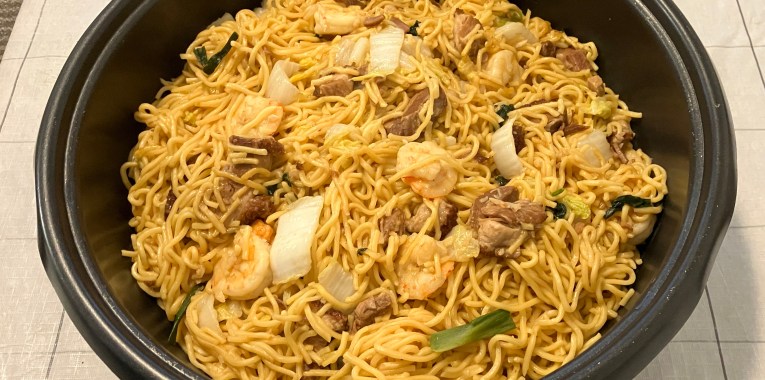

I love eating noodles and recently visited a new Asian grocery store nearby. I found fresh chow mein noodles there. Every time I go to an Asian grocery, I think of my grandma cooking in Malaysia. She often made really black chow mein with chicken, prawns, seafood, and vegetables. I bought some to try with stewed pork, prawns, Chinese cabbage, and my homegrown spring onions. I didn’t add carrots, capsicums, or bean sprouts, so it’s not very colourful.
Google: “Chow mein is a Chinese dish made with stir-fried noodles, vegetables, and sometimes meat or tofu. Over time, different regions of China created their own versions of chow mein, using various methods to fry the noodles and different toppings. The dish is known for its rich, dark sauce, which has a perfect mix of sweet and salty flavours, making it hard to stop eating.”
Today, my chow mein is simple with a few ingredients. It’s lighter than many recipes. Not many use stewed pork and prawns. I’m happy it turned out flavourful, comforting, and delicious. Let’s start stir-frying!!!
Ingredients
500 g fresh chow mein
1 1/2 canned stew pork
1/2 kilo prawns, peeled, deveined
8-10 leaves of Chinese cabbage, cut bite size
3 spring onion, cut to bite size
1 small onion, diced
2 Tbs minced garlic
1 Tbs minced ginger
enough hot water to soak noodles
a drizzle of oil
oil
Sweet and salty chow mein sauce
1/8 c chicken stock
4 Tbs light soy sauce
4 Tsp dark soy sauce
3 Tbs oyster sauce
3 Tbs Shao Xing Chinese cooking wine
2 Tsp fish sauce (OPT)
2 Tsp sugar
black pepper
Method
Bring enough of water to a boil in a pot. Drizzle some oil, then toss in fresh chow mein. Turn off the heat immediately, let the noodles soak in the hot water for 2-3 minutes. Gently loosen up all the noodles with a pair of chopsticks or tongs (food clipper). Drain chow mein and spread them on a tea towel for about 10 minutes. The tea towel will help to soak the excess moisture. Note: it’s always a good idea to read and follow the package instructions.
Meantime, mix the sauce ingredients in a metal bowl and set aside. Heat 1 Tbs oil in a large pan over high heat. Place half the prawns in the pan and sear each side for 45 seconds, using tongs to turn individually. Remove the first batch onto a plate. Add oil if needed, to sear the remaining prawns for 45 seconds on each side. Remember don’t crowd the pan! Less prawns gives better colour also easier to handle it won’t overcook.
Using the same pan, add another 1 1/2 Tbs oil over high heat. Swirl the oil around to cover the bottom to create a non-stick layer. Sizzle garlic, for 10 seconds, then add ginger for about 2-3 minutes. Stir a few times to release the fragrance. Now add the cabbage and cook for 2 minutes until just tender.
Next add in the stewed pork. Cook and stir for 1 to 2 minutes. Give the sweet and salty chow mein sauce a quick mix again. Then add the noodles and the sauce. Cook using metal spatula and a pair of chopsticks to fluff the noodles for 2-3 minutes, stirring often or until sauce is mixed through the noodles. Add in prawns and spring onion. Toss for another 1-2 minutes. Taste and season if needed additional soy sauce or pepper. Serve hot as a main with a cold beer or a glass of red wine. Enjoy!!!
Note: Leftovers will keep for 3 to 4 days in the fridge. You may omit Shao Xing chinese cooking wine and just use stock or mirin. You can add bok choy, carrot, bean shoots best soak in water in an airtight container in the fridge. Change the water every couple of days. This will extend the shelf life longer.
You can add chicken, beef, and seafood. For vegetarian chow mein, add the 3 colours of capsicum, carrot, Chinese cabbage, kai lan, choy sum, and mushroom. You can make a sauce thickener using 3 Tbs of water plus 1 1/2 Tbs of cornflour. I didn’t add it as the stewed pork had caramelised sauce.
https://helenscchin.com/2024/09/26/chow-mein-stewed-pork-and-prawn/
#helenscchinrecipes
#asianculinarycurrynoodles
#mainmeal
#cookingforthefun
#foodiesplus
 helenscchin's Blog
You must be logged in to post a comment.